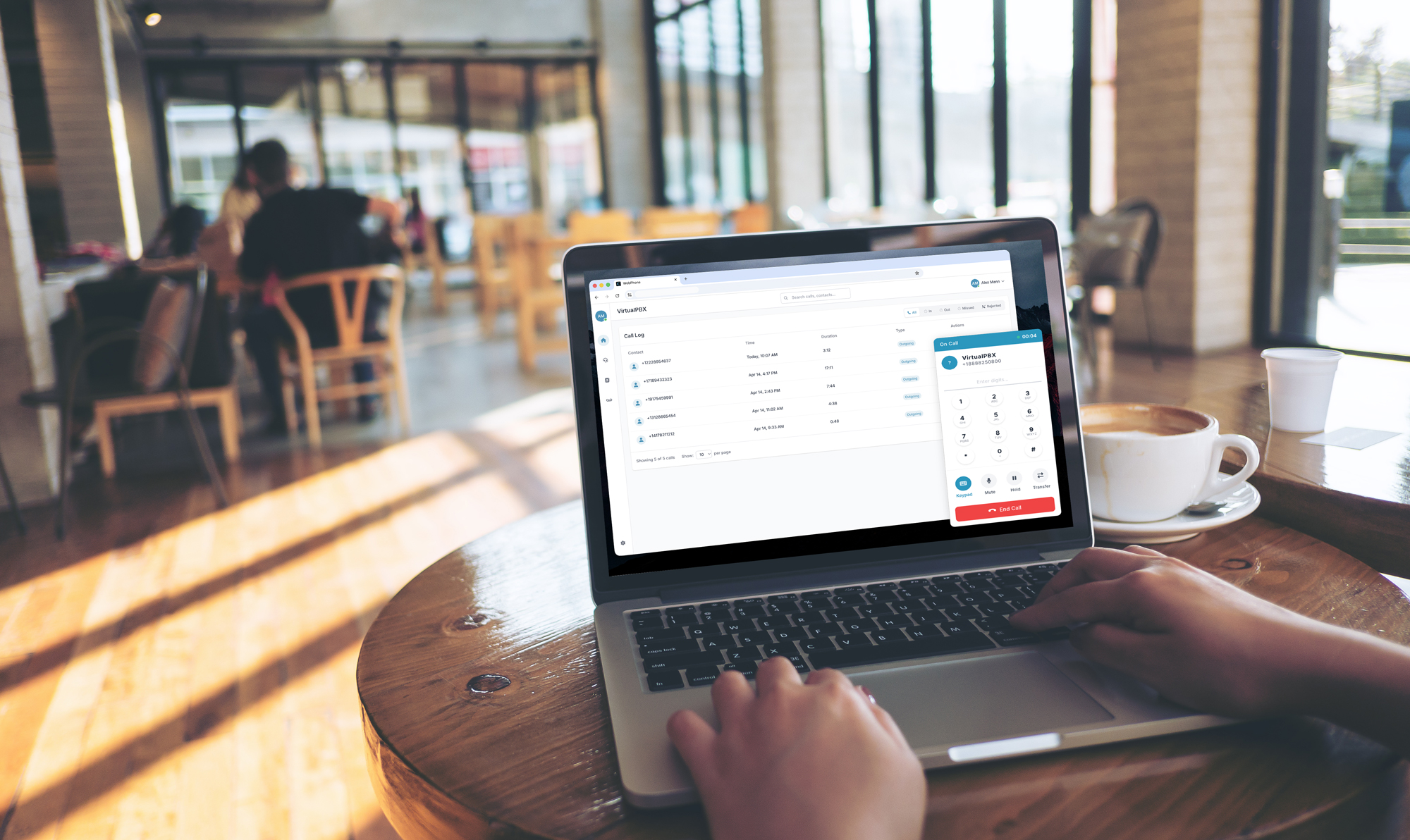
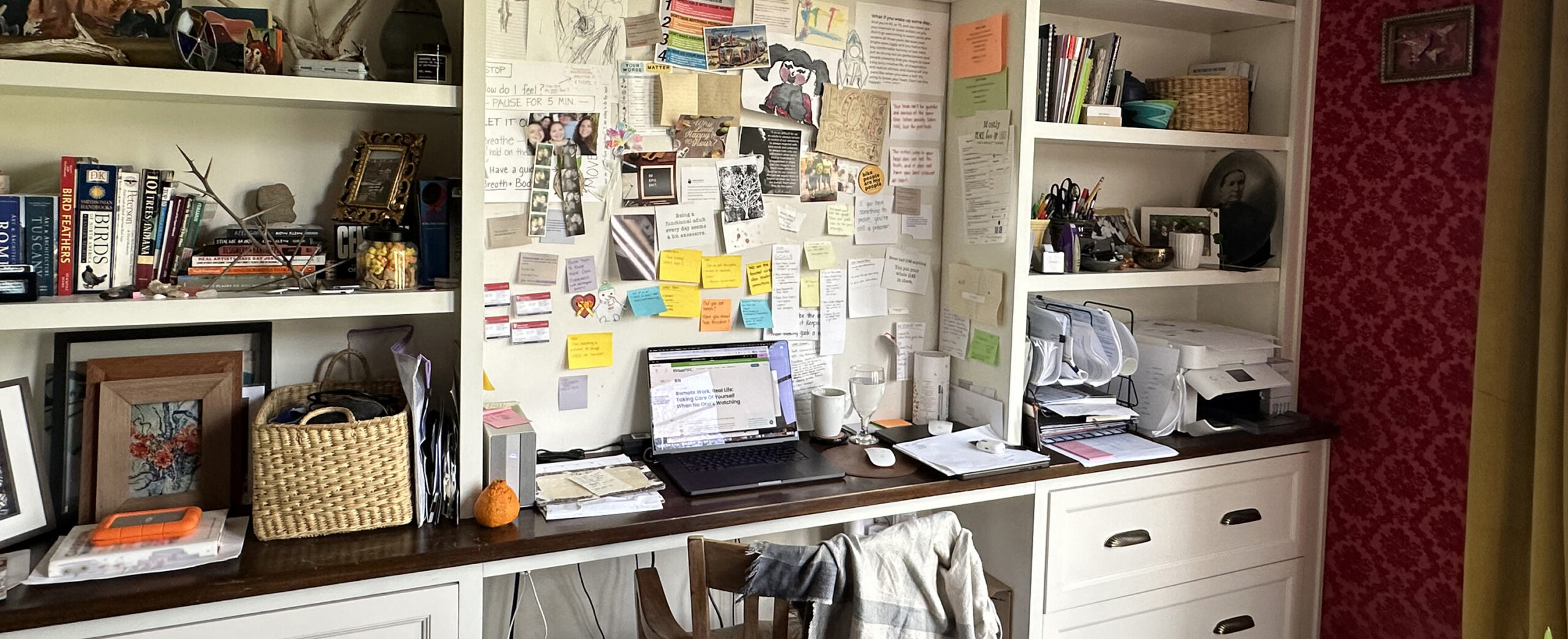
Yep—that’s my real workspace. What’s the point of sharing if I’m not going to be brutally honest with myself and with you.
At the time of beginning this blog it’s 2:30 PM—and I’ve done it again. Worked straight through lunch.
It wasn’t intentional. I was in a groove, moving from one task to the next. And then it hits: the headache, hunger, and that foggy feeling where I can’t focus, but I also don’t want to stop. So I reluctantly stand in the kitchen, trying to intentionally piece together a real meal (with 30g of protein no less, as a female in my 40’s) while fighting the urge to grab something quick and jump back in.
This isn’t just a bad personal habit, it’s workflow in action. When tasks, messages, and tools demand attention in real time, it’s easy to let the day stretch itself across you. And companies often unknowingly enable it: asynchronous channels, “quick” updates after hours, and the pressure to keep momentum all quietly reward skipping breaks or working late.
Most of us at VirtualPBX have been working remotely for a decade or more, be it here or somewhere else. As a company, we had a 5-year head start on those that transitioned during the pandemic, and at this point, we’re doing a lot of things right. But there will always be individual ownership as well as continued vigilance for improvement. Comments from our leadership team when casually reflecting on our remote work challenges come across like:
“We have really long dry spells in the fun channel.”
“We made a show and tell channel that no one uses.”
As a company, we have to diligently strive for ways to connect our people and our teams through the work, but also through connection. In this virtual age, we’re quick to understand that the outcome of in-person water cooler talk is actually team building and inter-team connection on a constant simmer. Recreating that virtually is nuanced, and requires ongoing efforts through a balance of creativity, authenticity, and enthusiasm. It requires leadership willing to lead by example and team members who feel comfortable enough to sacrifice short-term productivity for long-term growth.
Remote work isn’t new anymore, but how we live with it still is
Remote work has settled in permanently.
Before 2020, fewer than 6% of workers were remote. Today, closer to 1 in 5 Americans works from home at least part of the time, according to the Bureau of Labor Statistics. Hybrid work has become the default for many roles.
While the shift has actually happened with relative speed, adjusting to it healthily has not.
Remote work gives flexibility, control, and indisputable levels of elevated productivity. In fact, the Bureau of Labor Statistics specifically links remote work to significant gains in overall productivity for employees and companies alike. But remote work also removes a lot of the structure and routine we didn’t realize we relied on. And without that structure, small but critical pieces start to fracture: nutrition, movement, and connection, to name a few.
The parts we don’t talk about
There’s a version of remote work that looks great from the outside. Comfortable. Home. Getting things done. But the reality is often messier. Let’s dive in.
You Forget About The Basics
Eating lunch. Drinking water. Standing up.
It sounds small, but skipping these things compounds fast. One coworker put it simply:
“My biggest struggle is standing up periodically throughout the day and keeping my energy levels high…I have a Rogue Echo Bike in my office and can workout legs, arms, core, and cardio in just 5 minutes.”
Research shows less structured work environments lead to reduced physical activity, nutritional compromises, and inconsistent daily routines, reducing overall healthy work-from-home habits.
Your body feels it first
Remote work usually means more sitting—and fewer natural interruptions. No walking to meetings. No coffee runs. Over time, it shows: neck strain, tight hips, lower back pain.
A colleague here once remarked:
“Posture and a good chair are so much more important than I ever realized.”
And it’s true. You don’t think much about your setup until you’ve spent months working in one spot that may not have been designed for it.
Even guidance from the Mayo Clinic emphasizes the importance of regular movement and small posture adjustments throughout the day to prevent stiffness and fatigue.
The line between work and life blurs
When your office is always there, work is always there.
There’s no commute to mark the end of the day. No physical separation. No moment where you actually leave work behind. So instead, it just kind of… lingers. You close your laptop, but it’s still right there. You finish dinner, and it’s easy to think, I’ll just check one thing.
And most of the time, that’s exactly how it starts.
You open your laptop for a second, respond to a message, maybe knock out something small that’ll make tomorrow easier. It feels harmless. Productive, even. There’s no friction anymore—no drive back to the office, no effort required to “log back in.” Just a few clicks, and you’re back in your workday.
That convenience is one of the best parts of working from home. It’s also one of the easiest ways your workday quietly extends itself. Here’s how one of our team navigates:
“[The] challenge is the intrusive thoughts going in both work and home directions when I’m not in that mode…If I write it down I can stop thinking about it in that moment and get back to work or back to my downtime.”
CDC Research has shown that one of the biggest challenges remote workers face is difficulty disconnecting from work, which contributes to stress and burnout.
But beyond the data, it’s something most people feel before they ever name it. Work starts to fill the in-between moments—not because it has to, but because it can.
And over time, your day doesn’t really end. It just pauses, then picks back up again.
VirtualPBX Tip:
Here’s where the technology within AI agents can help reinforce company and team boundaries after hours. When the AI agent is on, teams can relax and know that questions are not going unanswered, urgencies will still come through if needed, and customers can always reach out to you if need be. Your team doesn’t have to feel the need to “check in” when they’re off the clock, holding the line between work and life.
Your environment affects more than you think
One thing I can’t say enough about is how much your environment shapes your energy.
“Some remote employees find joy from working from their bed—while this sounds like the dream at thirteen years old, you are bringing an energy focused around working to a spot in your home designed for rest. Setting up a space in your home purely for your remote position can channel all the energy to that spot.”
Lighting, scenery, and a set workspace make a bigger difference than most people expect.
As the lighting experts at Lumen note in their Edit on How To Light A Home Office, “Overly harsh fluorescent lighting is draining for your eyes… dim lighting can cause eye strain and headaches.”
The best setups tend to combine natural light with softer, layered lighting throughout the day. And it’s not just about comfort—exposure to natural light has been linked to better mood, improved sleep, and increased alertness. Additionally, natural light means you’re inviting the scenery of the outdoors in, for a healthier look beyond the 4 walls of your office space.
Even something as simple as working near a window or opening the blinds can shift how your day feels.
And then there’s the quiet
Some days, the quiet is a gift.
Other days, it’s isolating.
Remote work removes a lot of the casual interaction we used to take for granted—the quick conversations, shared breaks, the feeling of being around other people even when you’re focused on your own work.
Research from the National Library of Medicine has found that reduced social interaction is one of the more common challenges remote workers face, particularly when it comes to maintaining a sense of connection.
Or, as one teammate put it more simply:
“Cabin fever.”
VirtualPBX Tip:
In collaboration with our own tools, we use Roam to visually and passively connect our team throughout the day. Through our visualized, virtual office space, we can see our teammates, “knock” on the office doors of collegues, and easily communicate with those in and out of the office. Roam presents the look of an office, regardless of where you work.
And yet, most of us wouldn’t go back
Even with all of that, remote work isn’t going anywhere.
Because when it works, it really works.
People gain time back—on average, nearly an hour a day without commuting. They have more flexibility in how they structure their day. Many report better work-life balance and lower stress when they’re able to manage their time well.
That idea came up more than once when talking to our team:
“Working from home makes me much more intentional with how I use my time—personal and work.”
And that’s really the shift.
Remote work doesn’t automatically improve your life. It just gives you more control over how your day is built.
What you do with that control is what makes the difference.
What actually helps (in real life)
Most advice around remote work wellness is technically right, but not always realistic.
So instead of building the perfect routine, it’s more useful to focus on a few things that actually make a difference day to day.
Think of this less like a system and more like a set of reminders.
Start your day on purpose
Not a rigid schedule, just a consistent starting point. Coffee, a short walk, opening your laptop at the same time each day. Something that tells your brain: we’re working now.
End your day on purpose
Remote work doesn’t come with a natural stopping point. Create one. Close your laptop, leave your workspace, or shift into something personal. If you don’t define the end, your workday will keep going.
Fix your workspace (just enough)
You don’t need a perfect setup, but the basics matter. A supportive chair. Your screen at eye level. As much natural light as you can get. Small adjustments here can completely change how your body feels by the end of the day.
Move more than feels necessary
This is a big one. You don’t need a full workout. Just don’t stay in the same position for hours. Stand up. Stretch. Walk during calls. Even short movement breaks improve focus and reduce fatigue.
Eat real meals (not just snacks)
If you don’t make time for meals, they won’t happen—or they’ll turn into grazing at your desk. The American Institute For Cancer Research recommends you step away when you eat. It’s not just about nutrition—it’s a mental reset.
Drink water without overthinking it
Keep it visible. Refill it often. Most of us don’t realize how much dehydration affects energy and focus until we fix it.
Use your environment to your advantage
Open the blinds. Let in natural light. Keep your space clean enough to think clearly. Your surroundings have a bigger impact on your mood and energy than you expect.
Talk to people on purpose
Connection doesn’t happen automatically anymore. Call instead of message sometimes. Check in beyond tasks. A little bit of real interaction goes a long way.
Watch for your “tells”
That mid-afternoon crash. The headache. The inability to focus. Those aren’t random—they’re signals. Usually that you need food, water, movement, or a break.
Don’t let work quietly extend your day
Just because it’s easy to log back in doesn’t mean you should. Set boundaries around after-hours work, or it will slowly become the default.

Putting it to the test
After realizing where I could improve, I used the advice from my research, and ideas from my colleagues, to make a few changes. Here’s what I did, and what I noticed.
For me, the first step was simple: take lunch. Ideally between 12 PM and 2:30 PM.
Spoiler: I didn’t stick to that window very well this first week. I’m a work in progress. But I did take lunch.
Most days, that meant closer to 2:30 or 3 PM (again, still working on it). But when I did, I fully stepped away from my desk, ate a real meal, and moved around.
What that actually looked like:
- A couple days, I ate and took the dogs on longer walks—the kind that actually let me clear my head and even brainstorm
- A couple days, I ate while cleaning parts of the house
- One day, I grabbed something and ran a few quick errands
As a busy mom, I was kind of amazed at what I could get done just by getting up from my desk.
Even better—the reset worked. The change of scenery helped shake off stress from the morning and gave me enough energy to finish the day strong. And instead of a growing list of home tasks staring at me all week, I was slowly chipping away at it.
That’s a very different experience than the consistent 3 PM drag I was hitting from not eating and not moving.
But I’ll be honest. It wasn’t easy for me. It meant pausing before I was finished. It meant stepping away even when I felt behind. It meant having some kind of plan for lunch so I could actually look forward to it.
For my personality, that’s the hardest part. And honestly, the primary reason I stuck with it this week is because I told myself it was “for the blog.”
Here's my plan going forward
According to the University College London, it takes 66 days for a behavior to become automatic—a habit. That’s…a long time…
But, that’s my goal: 66 days of taking lunch every day.
I’m not going to put much of a time range around it. That’s going to be too much for me in this first step. For now, the goal is just to take lunch before 3:30 PM.
I’m also defining what “taking lunch” means:
- It has to be a real meal
- It has to be away from my desk
- It has to include some kind of movement
An apple with peanut butter alone doesn’t count. Yogurt alone doesn’t count.
Would a walk outside every day or a quick strength-training session be great? Absolutely. But that’s not realistic for my life, and I won’t be able to stick to it.
Instead, I’m counting things like running an errand or two, cleaning, even folding laundry. Will I try to add some squats in with that laundry? Absolutely.
The other trick for me will be to not let my work day creep into the evening hours. I noticed pretty quickly that when I took a real break, I also felt more tempted to work later. That’s a tradeoff I need to manage.
You’ll notice that none of this looks like a perfect routine or recommendations from a high-profile influencer. I’m not trying to reinvent my life or chase some idealistic version of productivity. I’m just trying to do one basic thing in a way I can actually stick to, which means adding enough flexibility to make it work on real days. Because honestly, 66 days of this? That’s already going to be a challenge for me.
It's not Complicated...But it Is
Let’s be real. None of this is technically complicated. None of it requires immense thought or planning.
But without the structure of an office, these small things don’t happen automatically anymore. You have to notice them, and choose them, throughout your day.
Because at the end of the day, it’s not just about productivity or getting through your to-do list. It’s about building a way of working that actually works for you—one small decision at a time.