
Are LiveChat, Intercom, and Zendesk still the best webchat services for businesses in 2026? The answer is not as straightforward as it used to be. I compared the top 10 platforms with a focus on real-world performance for small and growing businesses. Here’s how they actually stack up in terms of ease of use, value, AI capabilities, and day-to-day reliability.
How I Evaluated These Webchat Services
I evaluated each platform based on how smooth conversations felt, how quickly agents could respond, and how well the tools handled follow-up communication. I looked closely at ease of use, routing, AI features, pricing clarity, and how each tool fit into everyday workflows like support, scheduling, and customer follow-up.
- Ease of setup. If it takes more than 10 minutes to install a chat widget, that’s a red flag.
- Real-world usability. I tested each tool the way a customer actually uses chat, sending messages, switching devices, and pushing the system to see where it struggled.
- Small business value. How quickly SMB’s see ROI without overpaying.
- Management features. Routing, transcripts, reporting, staffing tools, and agent experience matter more than most people think.
- AI capabilities. Not “cute chatbot” AI, actual workflow automation and context‑aware responses.
- Pricing transparency. Google rewards content that helps users make decisions. So do I.
- Omnichannel support. Chat is great. Chat, SMS, email, and voice together are better when the experience is actually done well.
- Integrations. A chat tool that doesn’t integrate with your CRM is a liability.
What Is a Webchat Service?
A webchat service is a real-time messaging widget on your website that lets visitors talk to your team instantly. Modern tools go far beyond simple chat bubbles. Most now include features like:
- AI chatbots
- Automated workflows
- CRM syncing
- Shared inboxes
- SMS and social messaging
- Knowledge base integration
- Analytics and reporting
Together, these capabilities help businesses convert more visitors, support customers faster, and maintain conversations across devices and channels.
Comparing the Top 10 Webchat Services
-
LiveChat for reliable, polished live chat
-
Intercom for proactive messaging and strong AI automation
-
Zendesk Chat for enterprise support teams that need deep ticketing
-
Tidio for SMBs and e‑commerce stores that want simple AI chatbots
-
LiveAgent for teams that want chat plus a full helpdesk suite
-
Hubspot Live Chat for businesses already using HubSpot CRM
-
Freshchat for modern conversational messaging with a clean UI
-
Tawk.to for unlimited free live chat with basic features
-
Crisp for affordable multichannel messaging and team collaboration
-
VirtualText for SMS continuity, AI follow‑ups, and service workflows
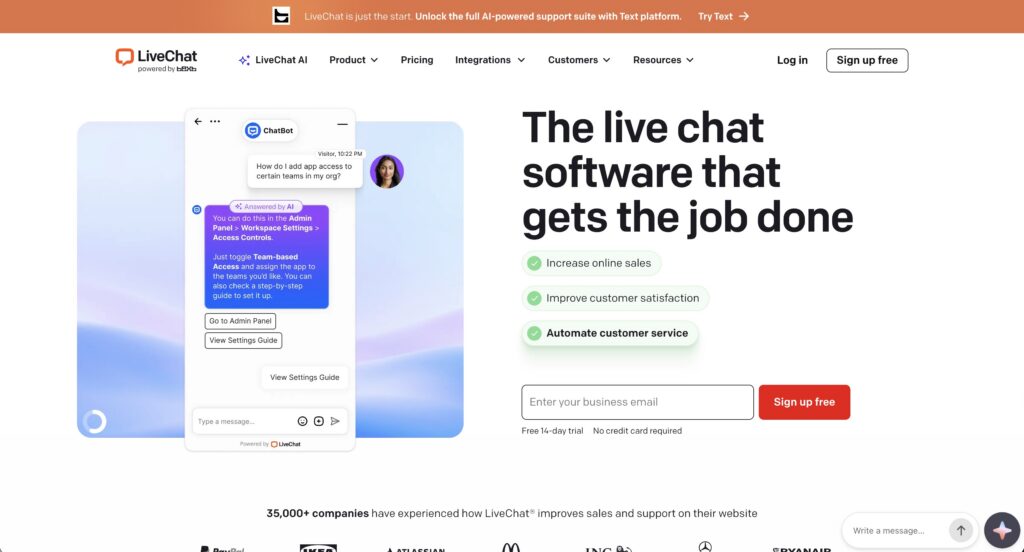
Best For: Best overall pure live chat
Starting Price: $25/user/month
LiveChat is a mature and professional live chat platform known for its clean dashboard, strong real-time visitor tracking, and excellent analytics. Small businesses appreciate its reliability and fast performance, making it a solid choice for sales and support teams. However, pricing rises quickly as you add agents or unlock advanced features, which can make it expensive for growing teams.
Pros
-
Excellent analytics and reporting
-
170+ integrations
-
Great mobile app
Cons
-
Gets expensive as you scale
-
Some advanced features require add-ons
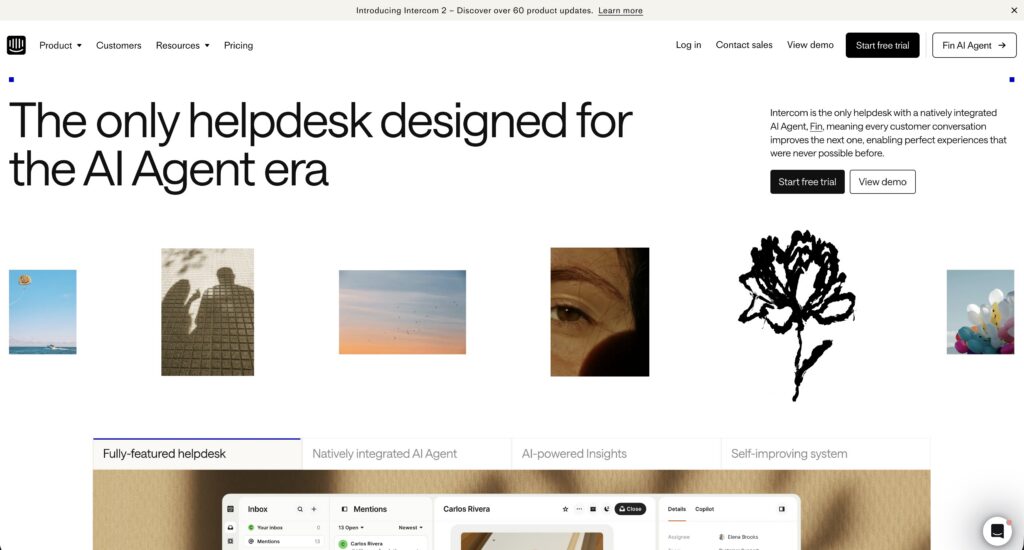
Best For: Proactive and AI-driven customer engagement
Starting Price: ~$39–$99/user/month
Intercom excels at proactive outreach and using customer data to personalize conversations. Its AI (Fin) can handle many routine queries effectively. However, many small businesses find the pricing steep and the platform overkill if they simply need straightforward live chat and basic automation.
Pros
-
Powerful proactive messaging and AI
-
Deep customer context
-
Strong automation
Cons
-
Pricing escalates quickly
-
Overkill for simple needs
-
Steeper learning curve
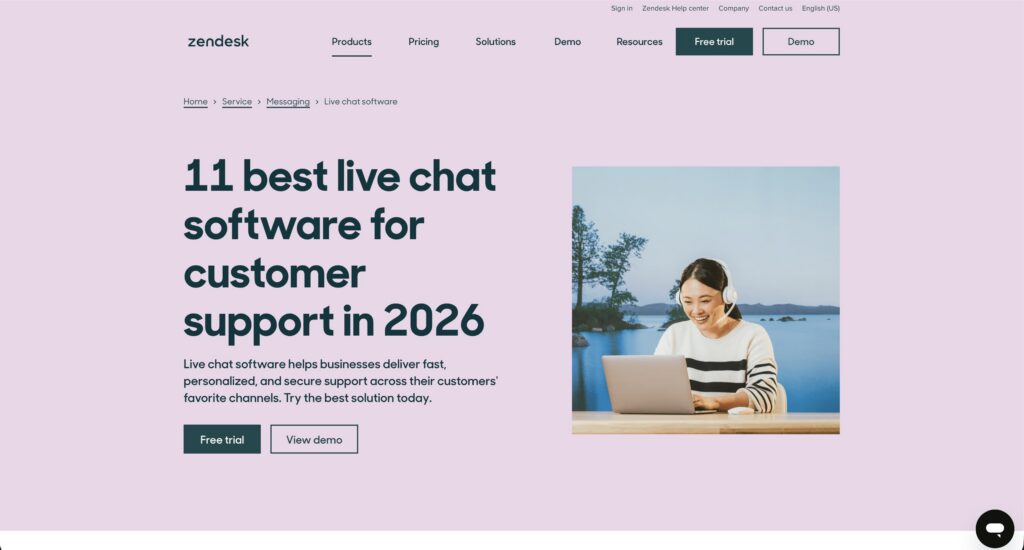
Best For: Enterprise and full support ecosystems
Starting Price: $69/user/month
Zendesk offers robust omnichannel support and seamless handoff from chat to tickets. Enterprise teams love the scalability and security, but small businesses often find it complex, expensive, and heavier than needed for basic website chat.
Pros
-
Deep Zendesk suite integration
-
Enterprise-grade security
-
Omnichannel support
Cons
-
Complex and expensive
-
Overkill for small teams
-
High per-agent cost
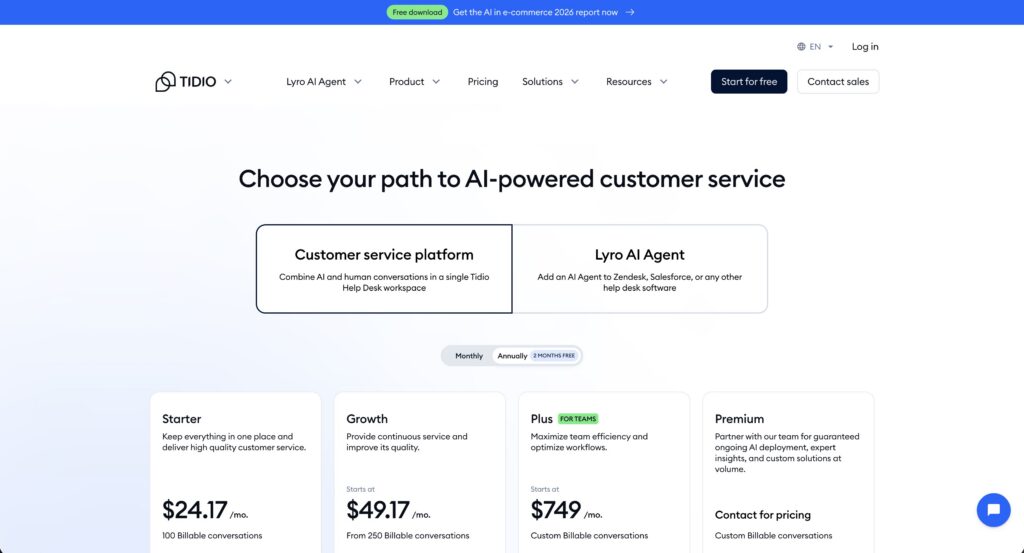
Best For: SMBs and e-commerce with strong AI chatbots
Starting Price: $29/user/month
Tidio stands out as one of the highest-rated options for small businesses, especially in e-commerce. Its Lyro AI chatbot is surprisingly capable at handling inquiries, and setup is extremely fast. Small teams love the combination of live chat and automation without complexity or high costs. However, advanced reporting is somewhat limited on lower plans, and branding appears on the free and basic tiers.
Pros
-
Very easy setup
-
Strong AI chatbot and live chat combo
-
Good Shopify integration
Cons
-
Limited advanced reporting
-
Branding on lower tiers
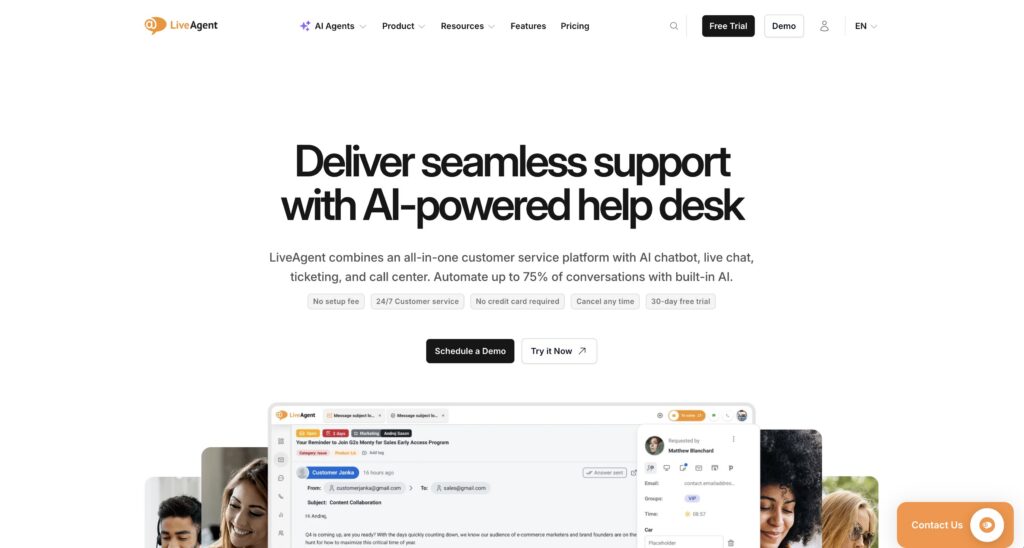
Best For: Feature-rich all-in-one helpdesk and chat
Starting Price: $19/user/month
LiveAgent delivers impressive value by combining live chat, ticketing, and even calls in one affordable platform. It includes strong automation and over 200 integrations. Some users note the interface looks a bit dated, but the depth of features at this price point is a great value.
Pros
-
Chat, helpdesk, and calls in one
-
Great pricing for the feature set
-
200+ integrations
Cons
-
Interface feels dated
-
Mobile app could be stronger
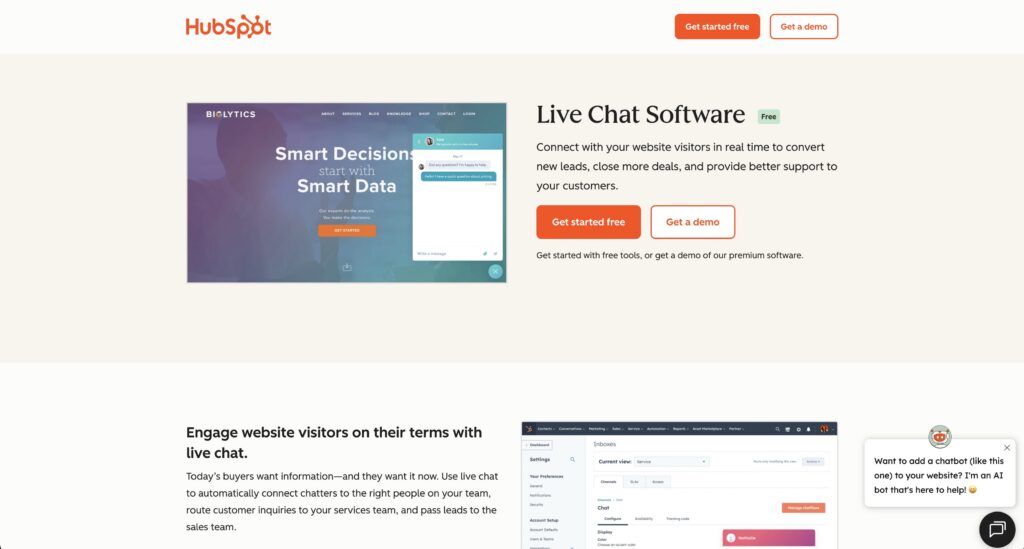
Best For: Companies already using HubSpot CRM
Starting Price: $15/user/month
If your team already uses HubSpot for marketing and CRM, the native live chat is convenient and creates contacts automatically. However, as a standalone solution, it feels limited compared to dedicated chat tools, especially on the free plan.
Pros
-
Seamless contact creation
-
Great for inbound marketing
-
Excellent for HubSpot Ecosystem
Cons
-
Free plan is a "dumb chatbot"
-
Limited if you are not using HubSpot
-
Less powerful than dedicated chat tools
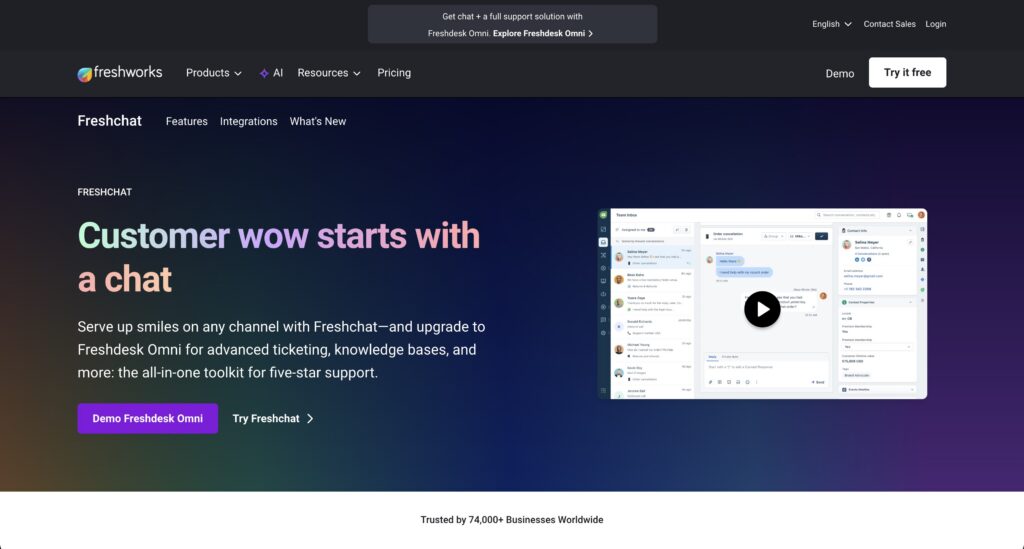
Best For: Modern conversational messaging
Starting Price: $19/user/month
Freshchat offers a clean, modern interface with solid AI messaging features and smooth integration inside the Freshworks suite. It’s a good middle-ground option for small teams wanting something more conversational than basic chat widgets.
Pros
-
Modern conversational UI
-
Good AI and messaging features
-
Strong Freshworks integration
Cons
-
Some features locked behind higher tiers
-
Analytics not as strong as leaders
Best For: Completely free and very low budget
Starting Price: Free
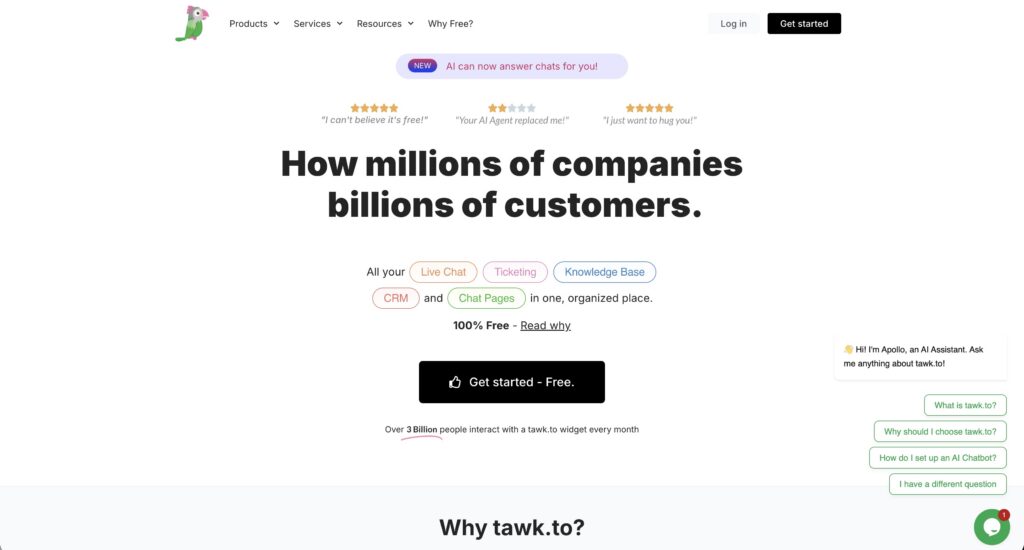
Tawk.to remains the go-to free solution for many small businesses and startups. It offers unlimited agents, websites, and conversations along with a customizable chat widget. While it is basic but reliable, it lacks advanced AI automation, proactive messaging, and detailed reporting, which can become limiting as your business grows.
Pros
-
Actually free
-
Unlimited agents and websites
-
Customizable widget
Cons
-
Limited AI and automation
-
Basic analytics
-
No advanced proactive messaging
Best For: Affordable all-in-one with team collaboration
Starting Price: $25/month
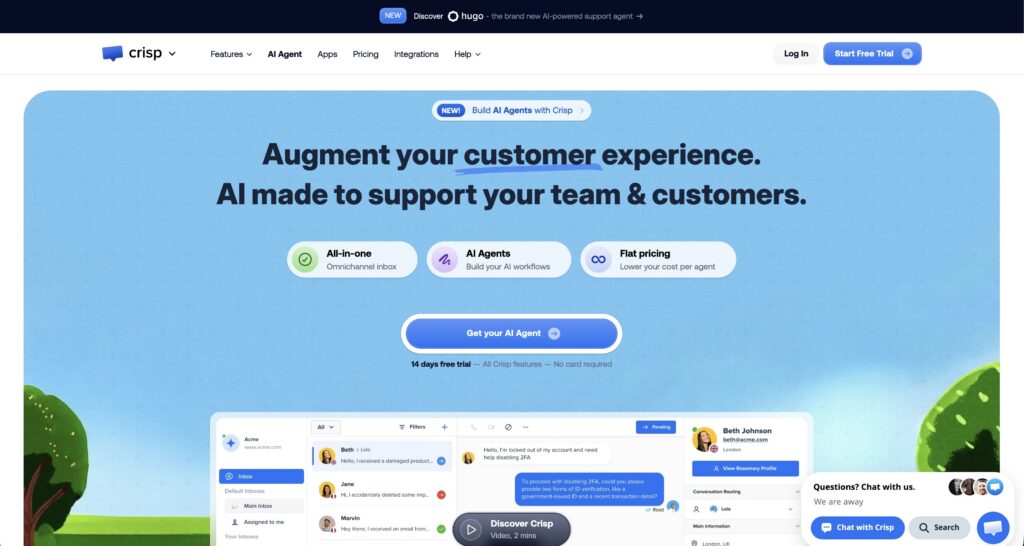
Crisp offers a clean shared inbox with good multichannel support for chat, email, and social channels. Its flat-rate pricing makes it attractive for small teams that want strong collaboration without paying per-agent. While it feels modern and lightweight, its AI features and analytics are still maturing and not as advanced as top competitors.
Pros
-
Modern shared inbox
-
Affordable flat-rate pricing
-
Good multichannel support
Cons
-
Analytics not as deep
-
AI features still maturing
-
Lightweight for large enterprises
Best For: Webchat to SMS continuity, service workflows, and AI-powered follow-up
Starting Price: $99/month
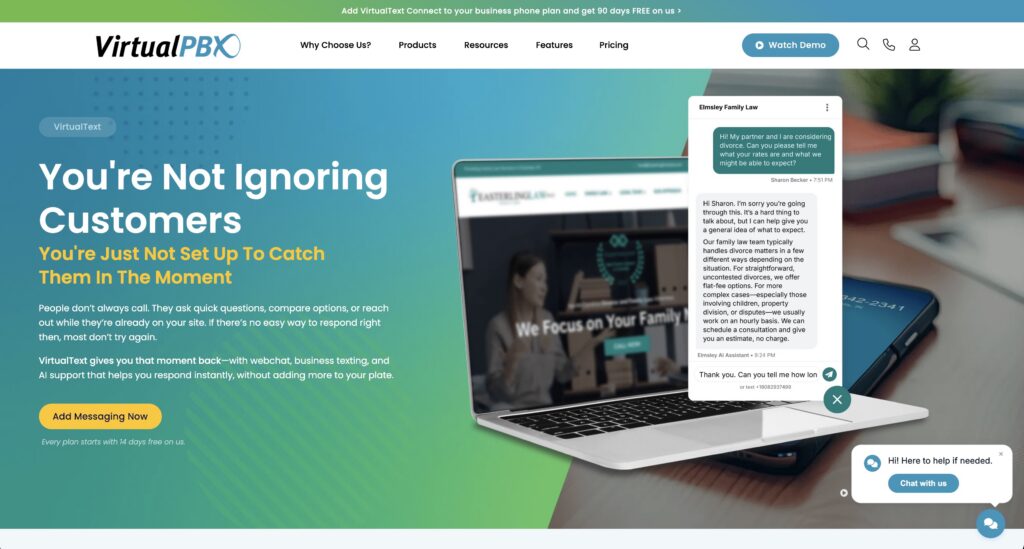
VirtualText stands out by allowing website chat conversations to continue seamlessly over SMS after visitors leave your site, all within one unified shared inbox. It includes AI agents for automated follow-ups, making it especially useful for service-based, appointment-driven, and local businesses that rely heavily on texting. However, as a newer platform, it has fewer reviews and a smaller integration ecosystem compared to more established tools.
Pros
-
Best-in-class webchat to SMS continuity
-
Unified shared inbox for chat, SMS, MMS, and team collaboration
-
AI agents and automation built for service workflows
Cons
-
Newer platform with a growing ecosystem
-
Smaller integration marketplace
My Live Chat Top Pick
My pick for the best webchat services is VirtualText. It stands out by solving a major pain point that most traditional live chat tools still struggle with. The seamless handoff from webchat to SMS, combined with a unified shared inbox and AI agents for automated follow-ups, makes it especially powerful for service-based businesses, home services, appointment-driven companies, and any team that relies heavily on texting customers.
While tools like Tidio and LiveAgent are excellent for standard website chat, VirtualText delivers superior long-term customer engagement by bridging the gap between your website and mobile messaging.
Additional Live Chat Resources
If you want a deeper look at how some of these tools work in practice, here’s an independent review from Best Reviews covering VirtualText’s features and workflows.