
The only way to truly reduce customer churn is to eliminate the fragmentation that makes customers feel like a transaction, not a relationship. But how does that fragmentation start? The conversation usually starts the same way: an urgent message via web chat, a detailed email outlining an issue, or a quick text query. The problem isn’t the initial outreach; it’s what happens next. When customers are bounced between channels, transferred between agents, or forced to re-explain their context multiple times, frustration rapidly sets in.
For too long, businesses have viewed this communication breakdown (the lost context and repeated information) as a minor inconvenience that merely impacts brand perception. But the reality is far more severe: fragmented communication is a hidden, powerful driver of customer churn. It doesn’t just make you look bad; it makes customers leave.
A PwC study found that 32% of customers will stop doing business with a brand after just one bad experience.
Connected experiences are now a critical part of the purchasing decision: Salesforce research shows that 70% of customers say connected experiences influence whether they buy again. When communications are disconnected, customers look elsewhere.
Reducing Customer Churn Will Win You New Customers
Reducing customer churn is not just about keeping the customers you have; it’s an effective strategy for acquiring new ones, too.
In today’s digital landscape, a strong company perception is paramount. Every customer interaction is a potential marketing asset or liability and the quality of your service quickly becomes public knowledge through:
Word of Mouth: Happy, retained customers are your most valuable promoters. They will actively recommend brands that provide seamless, respectful, and effective support.
Online Reviews: Platforms like Google, Yelp, and Trustpilot are where potential customers look first and competition is tough. Consistently poor reviews citing “having to repeat myself” or “slow responses” due to fragmented systems will sink your conversion rates, regardless of how good your product is.
Social Media: A single public complaint about a frustrating support experience can go viral, instantly damaging brand impression for thousands of potential customers.
By reducing churn through better communication, you turn potential liabilities into enthusiastic advocates, making retention your most powerful customer acquisition engine.
5 Ways to Reduce Customer Churn

Map and Standardize the Customer Journey
Identify every touchpoint (website, email, SMS, social media, app) and map how a customer transitions between them. Standardize the handoff process so that context is transferred automatically, regardless of the channel.

Unify Communication Channels in a Single Inbox
Stop making agents log into five different tools to manage conversations. By bringing all channels into one unified inbox, agents get a comprehensive, chronological view of the customer’s history, eliminating the need for repetition.

Establish Clear Conversation Ownership and Handoffs
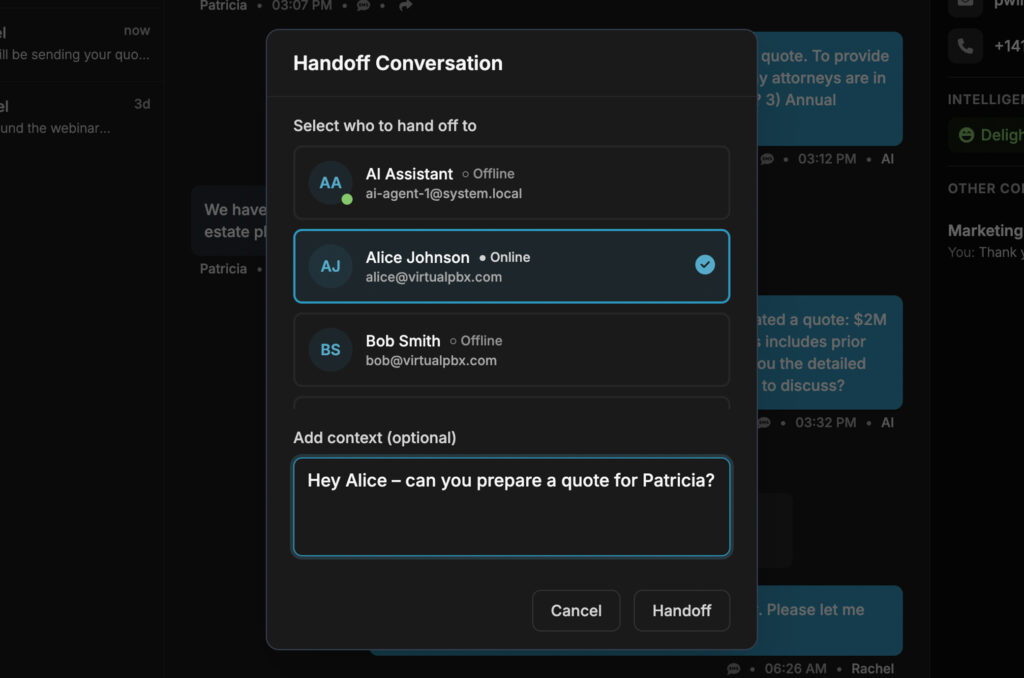
Define which team or agent owns the customer conversation at any given time. Implement clear transfer protocols and tools that require the transferring agent to summarize the context, ensuring the receiving agent can seamlessly pick up the conversation.

Proactively Measure Communication Gaps Before They Affect Retention
Utilize tools that track how many times a customer uses multiple channels for the same issue, or how long the total cumulative conversation time is across different agents. These metrics, such as “re-contact rate” or “channel hopping frequency,” are leading indicators of frustration that predict churn.

Empower Agents with Self-Service Resources
Ensure agents have immediate, organized access to knowledge bases, scripts, and internal notes. When agents are confident and can resolve issues quickly, the customer experience improves dramatically.
Putting an End to Fragmented Communication in Our Messaging Pilot
To practically implement these strategies, our new messaging pilot is built around a single, collaborative platform to solve the very root causes of fragmentation:
Sentiment Analysis
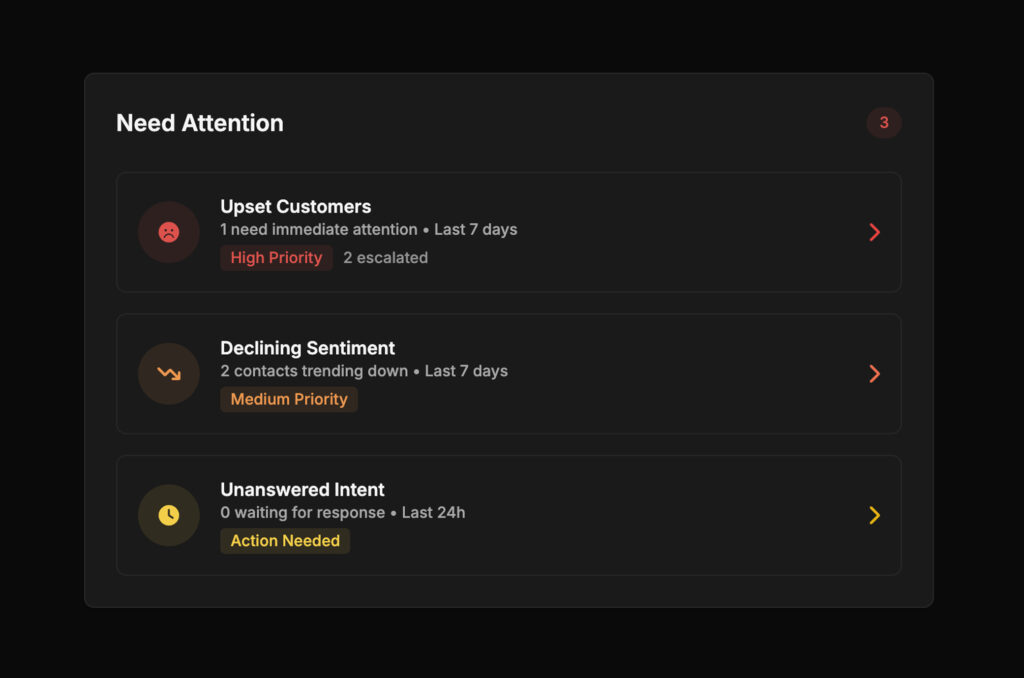
Automatic sentiment analysis gives your team the heads up when a customer becomes upset. It also allows teams to jump into workflows, tackling segments like “Upset Customers” or, on the positive side, “Purchase Ready” or “Happy Customers.”
Web Chat and SMS in One Place
We bring client text messages, web chat, and will soon be adding additional channels into a single, shared inbox. This provides a continuous, real-time history for every client. If a customer starts a chat on the website and follows up with an SMS an hour later, the agent sees one ongoing thread, ensuring they never have to ask, “Can you tell me your issue again?”
Real Collaboration Between Team Members
We eliminate “throwing conversations over the fence.” Our messaging pilot facilitates clear conversation ownership and handoffs with context. Agents can leave internal notes visible only to the team, and if a transfer is necessary, the conversation and its full history move together, empowering the receiving agent to provide personalized, informed service right away.
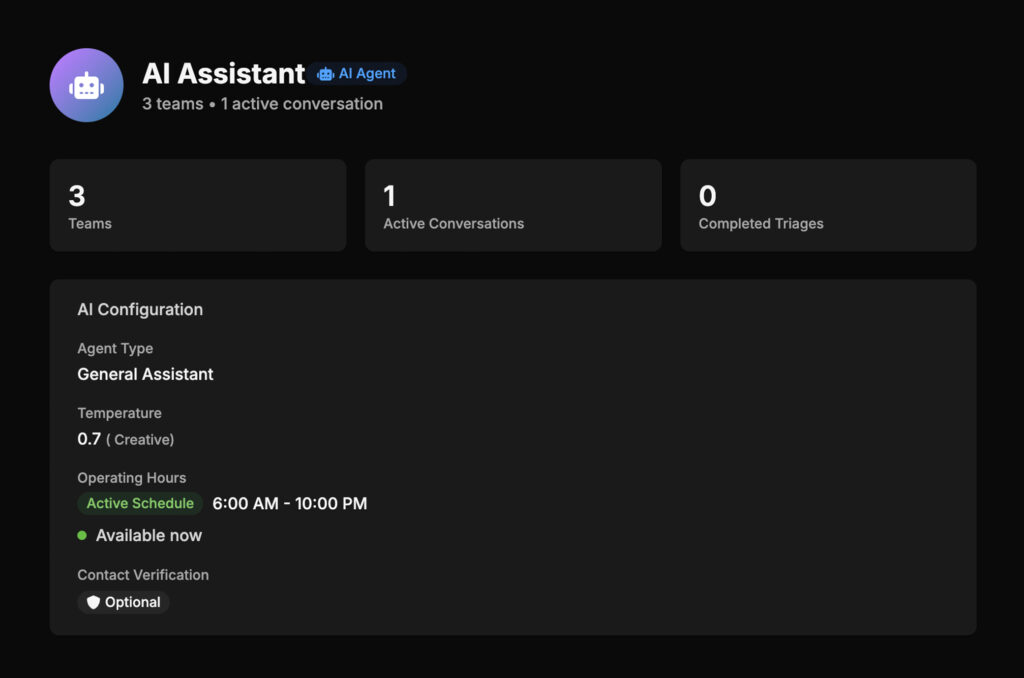
AI Agent That Extends Your Coverage 24/7
These agents are trained on your existing support documentation and can respond to messages on the schedule you dictate. Crucially, they operate within the unified inbox where you can monitor and takeover just like any other user.