Every unanswered business call is a chance for a customer to try somewhere else. A virtual receptionist helps make sure callers get a response and a clear next step, even when no one on your team is available to pick up.
For years, that typically meant an Auto Attendant that greeted callers, presented a menu, and directed them to the right person or department.
Those features are still useful, but virtual receptionists have come a long way.
Today, businesses can use AI receptionists to answer common questions, gather caller information, and bring a human into the conversation when needed. VirtualPBX offers both traditional call routing and AI Employees that work within your business phone system.
With more options available, which virtual receptionist features should you look for?
How Do Different Virtual Receptionists Compare?
There are several ways to handle incoming business calls, each with its own advantages.
Human Receptionist
How it Works:
A person answers calls, responds to questions, and uses judgment to determine what happens next.
Best Suited For:
Personal attention and complicated conversations that require human judgment.
Â
Phone Tree / Auto Attendant
How it Works:
Callers select numbered menu options to reach a department, employee, or voicemail box.
Best Suited For:
Straightforward, predictable call routing.
Programmable IVR
How it Works:
Calls follow rules-based paths based on caller input, schedules, or information available to the phone system.Â
Best Suited For:
Businesses that need more flexible routing across locations, departments, or hours.
AI Receptionist
How it Works:
Callers explain what they need in natural language. AI can answer questions, gather information, and connect them with employees.
Best Suited For:
Conversational call handling, busy-hour and after-hours coverage, and reducing repetitive work.
Each approach has limitations, too. Human receptionists require staffing, phone trees can’t answer open-ended questions, programmable IVR follows predefined rules, and AI receptionists depend on accurate business information and clear instructions.
These options can also work together. A business might have employees answer calls throughout the day, use automated routing for specific departments, and let an AI receptionist step in whenever the team is unavailable.
Regardless of the approach, several features make a meaningful difference in how callers experience your business.
Simple Configuration
A virtual receptionist should be easy to configure and adjust as your business changes.
With the VirtualPBX Auto Attendant, you can establish different call handling rules for business hours, lunch breaks, holidays, and other situations. You can also update menu options as employees, departments, and responsibilities change.
AI receptionists add another layer of customization. Instead of configuring menu selections alone, you can give an AI Employee a specific job, provide the information it needs, and define how it should handle different requests.
For example, a landscaping company might want its AI receptionist to answer questions about service areas, gather basic information for estimates, and transfer existing customers to an employee.
Before putting your virtual receptionist in front of customers, make a few test calls. Check that the greeting, call routing, and any AI responses work the way you intended.
Custom Greetings and Natural Conversations
The first thing callers hear helps establish their impression of your business.
Traditional Auto Attendants let you create custom greetings, record your own messages, or use text-to-speech to present callers with their options.
AI receptionists make that first interaction more flexible. Instead of listening to a list of departments, callers can explain what they need in their own words.
Of course, the greeting and conversation still need to fit your business. A receptionist answering calls for a law firm may need a different tone and set of instructions than one answering for an auto repair shop.
The best virtual receptionists make those interactions professional, helpful, and consistent with how your business communicates.
Accurate Answers Using Your Business Information
One of the biggest advances in virtual receptionist technology is the ability to answer questions rather than simply transfer calls.
Callers might want to know your business hours, service area, services offered, or policies. An AI receptionist can use information you’ve provided to respond without interrupting an employee.
If your business has multiple locations, changing hours, or different policies for different services, your AI needs access to the correct information.
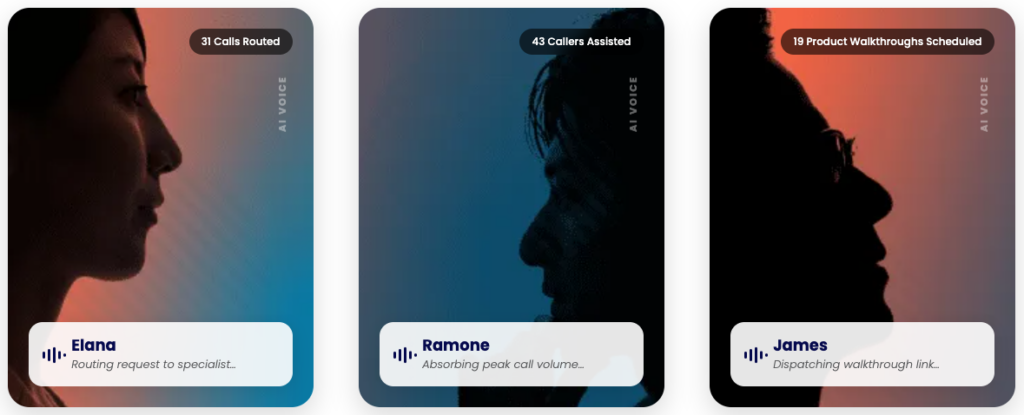
VirtualPBX AI Employees can be configured with job-specific knowledge and instructions, including which information sources should take priority when details conflict.
This is also why boundaries are important. When a question requires professional judgment or falls outside the AI’s instructions, the receptionist should know when to bring in someone from your team.
Intelligent Call Routing and Human Handoffs
Getting callers to the right person has always been one of the most valuable virtual receptionist features.
The VirtualPBX Auto Attendant can direct calls to individual extensions, voicemail boxes, or Ring Groups that ring multiple employees simultaneously or in sequence.
For businesses that need more sophisticated call handling, Programmable IVR adds routing based on factors such as caller input, location, business hours, and schedules.
AI Employees take this further by understanding what callers are asking for and directing them accordingly.
An AI receptionist might answer a few routine questions before discovering that a caller needs to speak with an employee.
With VirtualPBX, AI Employees work inside the phone system and can transfer calls directly to the appropriate person or extension. A blind transfer connects the caller, while a warm transfer can pass along context from the conversation, helping the employee pick up where the AI left off.
That means less time spent navigating menus, reaching the wrong department, or explaining the same issue repeatedly.
After-Hours and Overflow Coverage
Your business doesn’t stop receiving calls just because everyone is busy or the office is closed.
Traditional Auto Attendants can direct those callers to voicemail or another destination based on your business hours. That remains useful for businesses that simply need a reliable way to handle calls outside normal operating hours.
An AI receptionist can keep the conversation moving.
For example, someone calling after hours could ask whether your company services their neighborhood, explain what they need, and provide information for a callback.
The AI can answer appropriate questions, collect the details your team needs, and follow your instructions for handling the request.
You can also use AI as backup rather than having it answer every call. Your employees continue taking calls when they’re available, while the AI provides additional coverage when they aren’t.
The goal is to make sure callers have a useful next step, even when a person can’t answer immediately. If you’re not sure where your current setup falls short, our free After-Hours Guide includes a quick check and practical ways to improve the experience
What’s the Best Virtual Receptionist for Your Business?
The best virtual receptionist depends on what you need it to accomplish.
If your business only needs a professional greeting and a few routing options, a traditional Auto Attendant might be all you need. More complicated or dynamic call flows might benefit from Programmable IVR.
If you’re missing calls, spending too much time answering repetitive questions, or struggling with after-hours coverage, an AI receptionist may be worth a closer look.
VirtualPBX brings these capabilities together in a business phone system, with AI Employees that can be given specific responsibilities, trained on your business information, and connected directly to your team.
Want to hear what conversational AI can do? Call our live AI receptionist at (888) 825-0800 and experience how a VirtualPBX AI Employee handles a real conversation.