
According to a recent 2026 State of CX report, 68% of U.S. customers still prefer the phone when resolving a customer service issue.
But while they still want to use the phone, their tolerance for automated runarounds has officially hit zero. The business landscape is experiencing a massive cultural shift. Customers are demanding a direct path to a solution, and when things get complicated, they expect their right to speak to a human to be respected.
For years, the industry treated automation as a bouncer—a way to keep callers away from the staff to cut costs. But bolting technology onto a broken process doesn’t improve the customer experience; it just builds a taller wall. Going the “extra mile” doesn’t mean heroic agents scrambling to overcome bad software. It means taking a hard look at your customer service call flow and removing the friction before the phone even rings.
Here is how to audit your system today, implement modern IVR best practices, eliminate the hidden traps, and design an experience that lets AI do the heavy lifting so your human team can do what they do best.
The New Ways We Accidentally Trap Our Callers
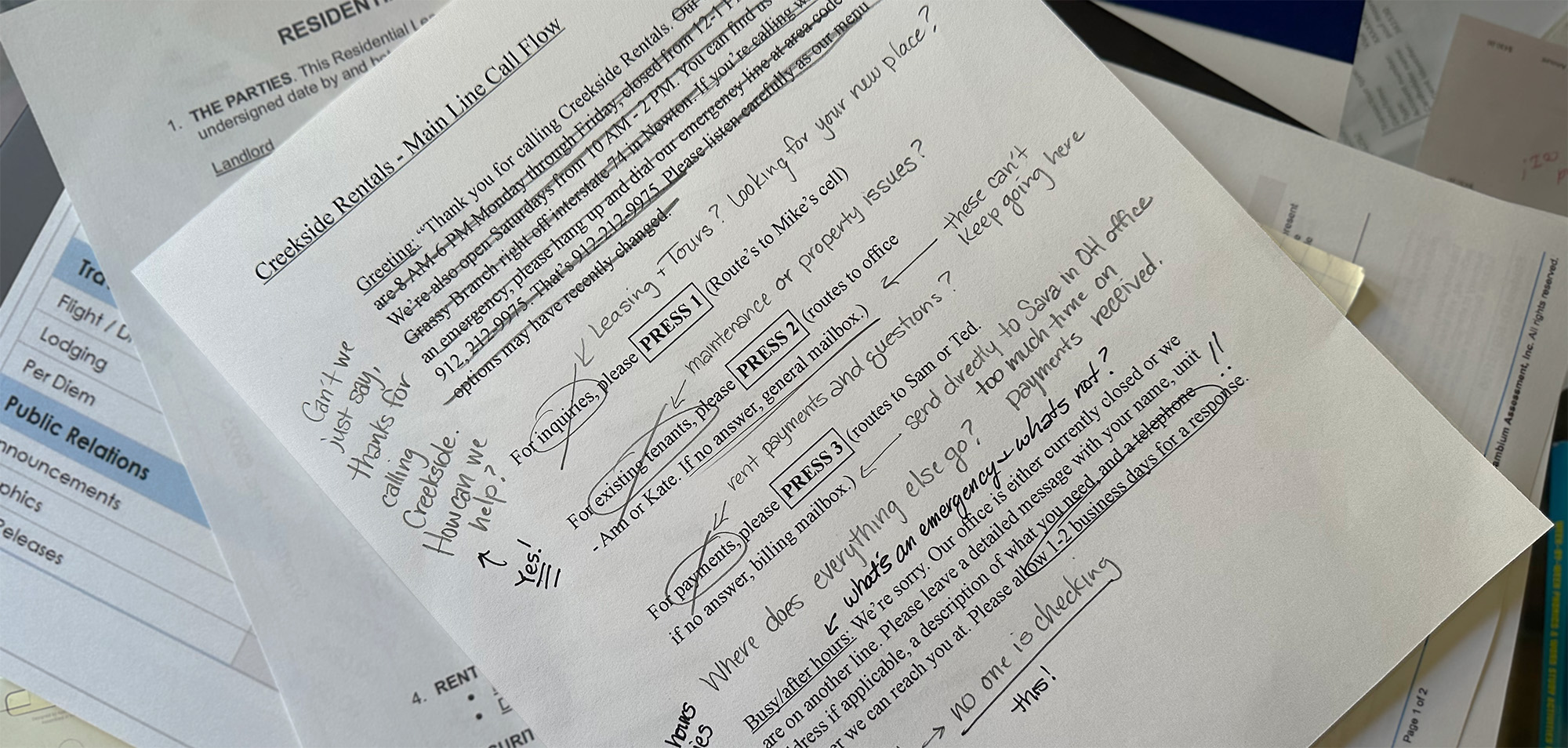
By now, most business leaders know the classic phone system traps. We all know that forcing callers to navigate an internal org chart (“Press 1 for Sales, 2 for Billing”) is bad design. We know that “infinite loops” and making customers repeat their account numbers three times will destroy trust. Those are table stakes.
But as companies rush to implement AI without following IVR best practices, they’re accidentally introducing junk and friction that alienate callers and burn out agents. If your system relies on any of these, you aren’t automating, you are aggravating.
-
The "Fake Empathy" Delay Companies often program their AI to sound human by adding fake typing noises or having the bot say, "I am so incredibly sorry to hear that you are experiencing this frustration today." It takes 15 seconds to say, it sounds synthetic, and it infuriates a stressed caller who just wants a fix.
-
The Penalty for Complexity (The Tier 1 Treadmill) This is when a system makes every single caller fight through the exact same automated gatekeeper. If a customer has a massive, account-breaking emergency, they shouldn't have to navigate the same AI screening questions as someone calling for your business hours.
-
The Blind Drop to Voicemail: The system understands the problem, says "Let me transfer you to a specialist," and the customer breathes a sigh of relief. The phone rings twice... and dumps them into a standard voicemail because the agent was on another call.
“If a customer is bringing up an issue that they’ve been having, we can offer suggestions for how to avoid that issue… to remove a lot of those hindrances out of your system and make it just kind of flow the way that you need it to.”
IVR Best Practices: Build a Map, Not a Trap
A well-designed phone system acts like a concierge. To fix a broken call flow, operations leaders need to implement these core IVR best practices:
1. Design for Intent, Not Departments (The Menu Fix)
If you are using a standard phone menu, stop listing your internal org chart. “Press 1 for Sales, Press 2 for Billing” forces the customer to translate their problem into your corporate structure. Instead, map the options to their actual needs. Change it to: “Press 1 if you are calling about a recent invoice or payment issue. Press 2 if you are looking to purchase a new product.” It isn’t a dramatic technological shift; it is just thoughtful design.
2. Shift the Burden of Interpretation to AI
The ultimate evolution of the thoughtful menu is removing the menu entirely. Instead of making the customer guess which button fits their problem, put AI at the front door. With tools like VirtualPBX AI Voice, the caller simply states what they need (“I need to reset my password” or “My router is offline”). You are putting the burden of interpretation on your infrastructure, not your customer.
3. Radical Efficiency Over Fake Empathy
Let robots be robots. Stop trying to code empathy and use AI for what it excels at: ruthless efficiency. Our AI handles routine requests by quickly gathering the facts and acting on them. By letting the AI absorb the robotic tasks, you save the actual emotional connection for the human who picks up the phone.
4. Replace Voicemail Dead Ends
A system should never promise a human and deliver a beep. If a queue is full, give the caller options. Better yet, stop using traditional voicemail as a junk drawer where callers leave panicked, incomplete messages. A modern AI answering service can step in to take structured details—getting the exact problem, the last name, and the callback number—so the agent can immediately start fixing the issue before returning the call.
5. Pass the Context (The Baton Handoff)
The single most important metric in a successful transfer is context. When a caller reaches a human, the agent’s screen should already show who is calling and what the AI already attempted to do. The agent’s first words shouldn’t be “How can I help you?” They should be, “I see you’re trying to update your account, let’s fix this together.”
The Real Extra Mile is Removing a Mile
We often say that going the extra mile means doing more. But when it comes to a customer service call flow, going the extra mile actually means taking things away:
- Removing the hunt for a phone number.
- Removing the guesswork about which menu option fits the problem.
- Removing the dead ends where you can't reach a human.
- Removing the need to repeat yourself.
Let robots be robots, so humans can be human. When you use technology to handle the friction, you protect your team’s emotional bandwidth.
“I know we’re not a therapist office… but it does come up quite a lot. You have customers call in who are insanely stressed out… And the empathy portion of that is being right where they are and going, ‘This is really important to your business. I’m going to be locked in working on this with you until the very end.'”
The bottom line: Tech Requires Strategy
That level of empathy is only possible because our customer care team isn’t exhausted from acting like human routers all morning. The system cleared the path so the human could go the distance.
Technology only works when it is mapped to the reality of your customers. For some, it’s about getting the keys and running with the applications to build their ideal system. We can do that. But for businesses that need a strategic partner, our team provides 1:1 onboarding. We sit down with you to design and refine call flows using real-life IVR best practices so they actually make sense for the people calling in.
“I try to anticipate… I try to gather clues that I hear from them and think about which features on our system can help them succeed as a business… ‘Oh, you have multiple users, you’ve got people in multiple teams? We can create different groups. You have a second business? We can create a whole new flow.’ It really just comes down to trying to gather clues… and thinking about which features can help them succeed.”
We don’t believe AI should make it harder to talk to a person. We believe it should make it effortless to reach the right one.