
When was the last time you actually listened to a voicemail?
For a lot of us, voicemail already means reading a transcription or glancing at a notification. Opening the inbox, pressing play, and sitting through the recording feels like something you do only when you have to.
For a business though, that recording can kick off a whole chain of work. Someone has to remember to find the message, listen to it, replay the part where the caller rattled off their number, figure out what they need, chase down anything they forgot to mention, decide who should handle it, get the message to that person, follow up with the caller, then probably make a note somewhere that the interaction happened.
That’s an awful lot to ask from a missed call.
Voicemail made sense when the alternative was a ringing phone and no information at all. We have better options now, and AI Employees are the voicemail replacement service you’ve been looking for.
A recording only captures what the caller gives you
Take a maintenance call to a property management company.
A tenant might leave their name, building, unit number, a description of the problem, and some idea of how urgent it is. Or they might forget the unit number, mumble the callback number, or spend two minutes explaining the situation without mentioning the one thing the maintenance team really needs to know.
Once they hang up, that’s the message. There’s no chance to ask a quick follow-up question or clarify something that didn’t make sense.
The same problem comes up when a patient needs to reschedule an appointment, a homeowner wants an estimate, a client has a billing question, or a prospective customer calls after hours. The details change, but the limitation is the same: voicemail depends on the caller knowing what information the business needs and remembering to include it.
We covered the broader cost of missed and after-hours calls in our After Hours Guide. Voicemail has traditionally been the fallback for those calls, but simply saving a recording doesn’t mean the business got everything it needed from the conversation.
Transcription helps…up to a point
Transcription makes it easier to deal with, but doesn’t really change what voicemail is.
A transcription can only work with what the caller actually said. If they left out the address, gave an unclear name, or never explained how urgent the problem was, turning the recording into text doesn’t fix that.
What happens if you skip the voicemail inbox?
Instead of waiting for the caller to leave whatever message comes to mind, an AI-driven voicemail replacement can have a short conversation with them while they’re still on the phone. If an important detail is missing, it can ask. If something isn’t clear, it can ask about that too.
The caller shouldn’t feel like they’re filling out a form over the phone though, the conversation still has to sound and feel natural. The system just needs to know what information matters. Once the call ends, the business has a message with the details it needs.
That’s just one example of what AI Employees from VirtualPBX can do.
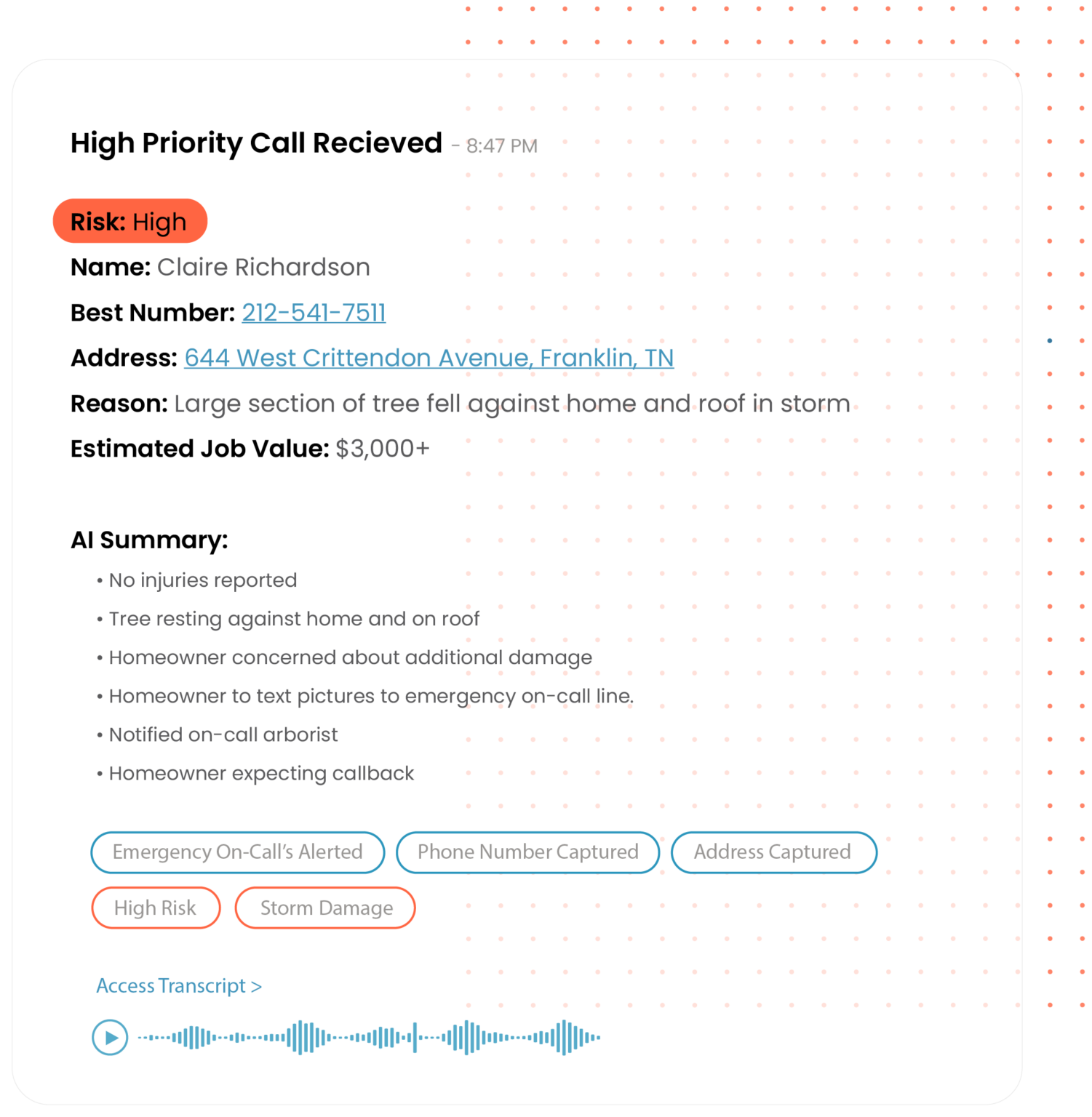
Your employee can function as an AI answering service that takes messages conversationally, organizes the details, and delivers them to the right person based on the business’s rules.
Where that message ends up matters too. If AI captures everything perfectly but leaves it sitting in another dashboard somebody has to remember to check, we’ve basically just rebuilt voicemail with newer technology.
AI Employees deliver structured messages to the people responsible for handling them, so the information is already where it needs to be when someone is ready to respond.
So, is this the end of voicemail?
We think it should be.